Trolley strikes, kick marks, scratches, dents, salt deposits, and failed coatings do not all require the same response. You will be able to distinguish visual camouflage from genuine protection, assess damaged panels, specify the sheet and support system, and decide when another surface material is the safer choice.
Key takeaways
- Use angled light to separate dents, scratches, stains, and coating failures.
- Specify grade, thickness, finish, and backing support for the panel location.
- Avoid patterned sheets where hygiene, flatness, or uninterrupted branding matters most.
- Protect panels during fitting and clean without abrasive pads or chlorine bleach.
What check patterns hide, and what they cannot prevent
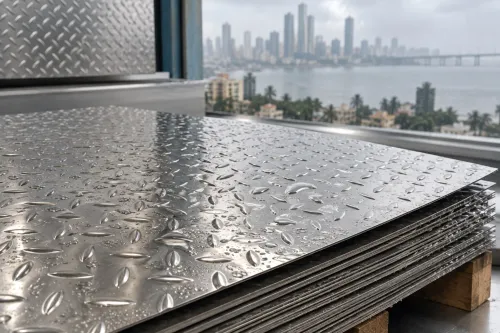
Raised checks break up reflected light, so scuffs, kick marks, fingerprints, and shallow trolley rubs attract less attention than they would on a flat mirror or satin sheet. That makes check pattern stainless steel sheets useful in lift interiors, service corridors, column wraps, entrance zones, and wall guards where repeated contact is visible.
The pattern hides appearance; it does not add guaranteed impact resistance. A thin panel can still dent when a trolley, door edge, or cart strikes one raised section, especially if the substrate, stud spacing, clips, adhesive, or perimeter restraint is inadequate.
Before choosing check pattern stainless steel sheets for commercial properties, separate camouflage from protection:
- Embossing disguises fine scratches through changing highlights and shadows, but a deep gouge remains visible and may expose the base metal.
- Raised relief can make shallow dents harder to notice, but it cannot stop buckling, lifted edges, or damage that reaches the supporting substrate.
- Stainless steel resists corrosion through its alloy and surface condition; the pattern does not prevent staining from chlorides, harsh chemicals, or trapped dirt.
- PVD or mirror finishes can show permanent gloss mismatch after abrasive cleaning, even where the metal is undamaged.
Approve a full-size sample under the project’s actual lighting. A small flat coupon cannot show how embossing changes reflection angles, shadowing, and highlight variation. Specify the alloy, base thickness, pattern depth, pitch, exposed finish, and support system separately; “designer sheet” alone proves none of them.
How to assess damaged commercial stainless steel panels
A cleanable deposit is not panel failure. Inspect commercial stainless steel panels in good light, including laps, folded returns, penetrations, fastener heads, embossed valleys, and the substrate behind loose sections.
1. Clean the panel when the defect is chloride residue, construction dust, fingerprints, carbon-steel dust, or surface grime. Rinse with clean water, use a compatible mild detergent or stainless-steel cleaner, then dry; steel wool, carbon-steel brushes, hydrochloric acid, chlorides, and abrasive compounds can create permanent staining or scratches.
2. Repair the panel when the sheet remains secure and the damage is limited to a loose fastener, minor edge movement, or a shallow dent that does not break the finish.
Correct the support or fastener, isolate dissimilar metals where moisture or salt persists, and confirm that water can drain instead of collecting at the repair.
3. Replace the panel when you find a deep scratch, lifted edge, drilled hole, perforation, active corrosion, substrate damage, or a dent that affects the assembly. Replace damaged PVD panels rather than polishing through the coating; local colour and gloss blending is conspicuous on mirror and embossed finishes.
4. Resurface only when the finish system permits it and the entire visible area can receive a controlled, uniform treatment. Abrasive work changes gloss, direction, and relief highlights, so a partial pass usually creates a larger visible defect.
5. Record the damage, panel dimensions, alloy, base thickness, finish, and attachment method before ordering a replacement. A pattern can hide a mark, but it does not prove resistance to impact or corrosion.
How to specify thickness, grade, finish, and support
Specify checks pattern SS sheets as an engineered assembly, not by pattern name alone. The specification must state alloy grade, nominal unembossed base thickness, embossing height, pattern pitch, sheet size, exposed-side finish, reverse-side condition, and flatness tolerance. Confirm whether the quoted thickness means base metal or total embossed thickness.
1. Select the grade for the environment. State the required stainless grade, such as 304 or 316L, after considering chlorides, moisture, food acids, cleaning chemicals, and coastal exposure. ASTM A240/A240M verifies sheet chemistry and mechanical properties; it does not define decorative geometry, PVD colour, mirror reflectivity, or cosmetic damage limits.
2. Define the finish by approved sample, not “mirror” alone. Embossed SS designer sheets alter reflection angles through raised checks, creating highlights and shadows that a flat mirror coupon cannot show. Approve a full-size sample under the project’s actual lighting, and prohibit unapproved abrasives, polishing compounds, and chemicals.
3. Set pattern-specific tolerances with the fabricator. ASTM A480/A480M covers general flat-rolled product tolerances, but it does not automatically control embossing depth, pitch, edge distortion, or finished flatness.
4. Design the support behind the sheet. State substrate type, stud or backing spacing, adhesive or clip system, perimeter restraint, joint treatment, and expected trolley, cart, door, or kick impact. Thin checks pattern SS sheets can dent despite their rigid appearance; embossing alone is not an impact rating.
If the panel will face repeated impacts, require the support assembly—not only the stainless skin—to meet the project’s load and maintenance requirements.
Where patterned stainless steel works—and where it does not
Choose check pattern stainless steel sheets for lift interiors, wall guards, column wraps, service corridors, retail fixtures, reception counters, food-service areas, and entrance zones where scuffs and kick marks are frequent. Their relief breaks up reflections, so light abrasion attracts less attention than it would on a flat polished face.
Embossing does not make thin sheet impact-rated: a trolley can still dent the base metal or crush an unsupported return.
| Option | Best fit | Limitation |
|---|---|---|
| Check pattern stainless steel sheets | Lift interiors, column wraps, corridors, entrances | Hides minor scuffs; does not prevent dents, deep scratches, or corrosion at laps and fasteners |
| Flat stainless steel | Food-service walls, clinical areas, and surfaces requiring simple wipe-downs | Easier to clean and inspect, but shows scratches and reflected dents clearly |
| FRP or HDPE panels | Loading routes, utility rooms, and severe trolley-impact zones | Strong impact tolerance, but offers less fire, heat, and premium-finish performance |
| Aluminium panels | Large lightweight wall areas and ceiling features | Lower weight, but dents and galvanic corrosion risk require careful detailing |
| Ceramic tile | Wet, hot, or chemically demanding walls | Hard surface, but grout joints can trap soil and cracked tiles need local replacement |
Use commercial stainless steel panels where the patterned finish improves appearance without replacing a properly supported assembly. Avoid it when you need an uninterrupted hygienic surface, frequent abrasive scrubbing, or proven impact performance from the facing alone. A full-size sample under project lighting will expose reflection and relief differences before approval.
How installation and cleaning control surface damage
Installation and cleaning control damage by preventing abrasion, contamination, and unsupported impacts. Lift panels instead of sliding them, and keep fabrication tables, gloves, suction cups, rollers, and tools free of swarf.
Remove burrs away from the exposed face, then keep protective film intact until nearby dusty work is complete; trapped chips can scratch mirror or PVD surfaces.
Clean with a clean-water rinse followed by a compatible mild detergent or stainless-steel cleaner. Work with the grain or directional finish, rinse residue from embossed valleys and around fasteners, and dry the panel. Never use steel wool, carbon-steel brushes, hydrochloric-acid or chloride cleaners, or abrasive compounds.
Polishing can permanently change relief highlights and gloss, while an unapproved cleaner can create a mismatch on PVD mirror panels.
Before you procure, put these details on the purchase order:
- Alloy and nominal unembossed base thickness
- Embossing height, pattern pitch, sheet size, and exposed-side finish
- Reverse-side condition and flatness tolerance
- Whether quoted thickness means base metal or overall embossed thickness
- Pattern-specific limits for depth, pitch, edge distortion, and flatness
ASTM A480/A480M does not automatically define those embossed features. Ask NIXON STEELIUM LLP for a finish sample and written tolerances before approving production, then engineer the substrate, stud spacing, clips or adhesive, perimeter restraint, and trolley impact load as one assembly.
Related products
 | Stainless Steel Embossed Sheets Specification Product Name Stainless Steel Products Steel Type Stainless Steel Steel Product Type Steel Sheets Grade 304 Thickness 0.5-5.0 Millimeter... View product → |
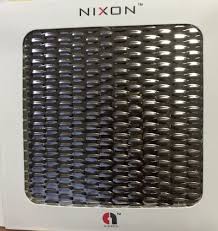 | Stainless Steel Embossed Sheets Specification Product Name Stainless Steel Products Steel Type Stainless Steel Steel Product Type Steel Sheets Grade 304 Thickness 0.5-3.0 Millimeter... View product → |
Frequently asked questions
What damage can check pattern stainless steel sheets hide?
Raised checks break up reflected light and make scuffs, fingerprints, kick marks, and shallow trolley rubs less noticeable. They do not prevent dents, deep scratches, corrosion, loose fixings, or failed coatings.
How do you assess damaged commercial stainless steel panels?
Clean the panel first, inspect it under direct and raking light, and record the location, size, depth, pattern distortion, corrosion, and attachment condition. Separate removable surface contamination from dents, scratches, and coating damage.
What should you specify for commercial stainless steel panels?
Specify stainless steel grade, sheet thickness, check geometry, finish, PVD coating if used, panel dimensions, edge treatment, fixing method, substrate flatness, ventilation, and support spacing.
Where are check pattern stainless steel sheets a poor choice?
Avoid them where a completely flat surface, uninterrupted graphics, strict cleanability, frequent food-contact sanitation, or precise flush interfaces matters more than impact concealment.
Keywords