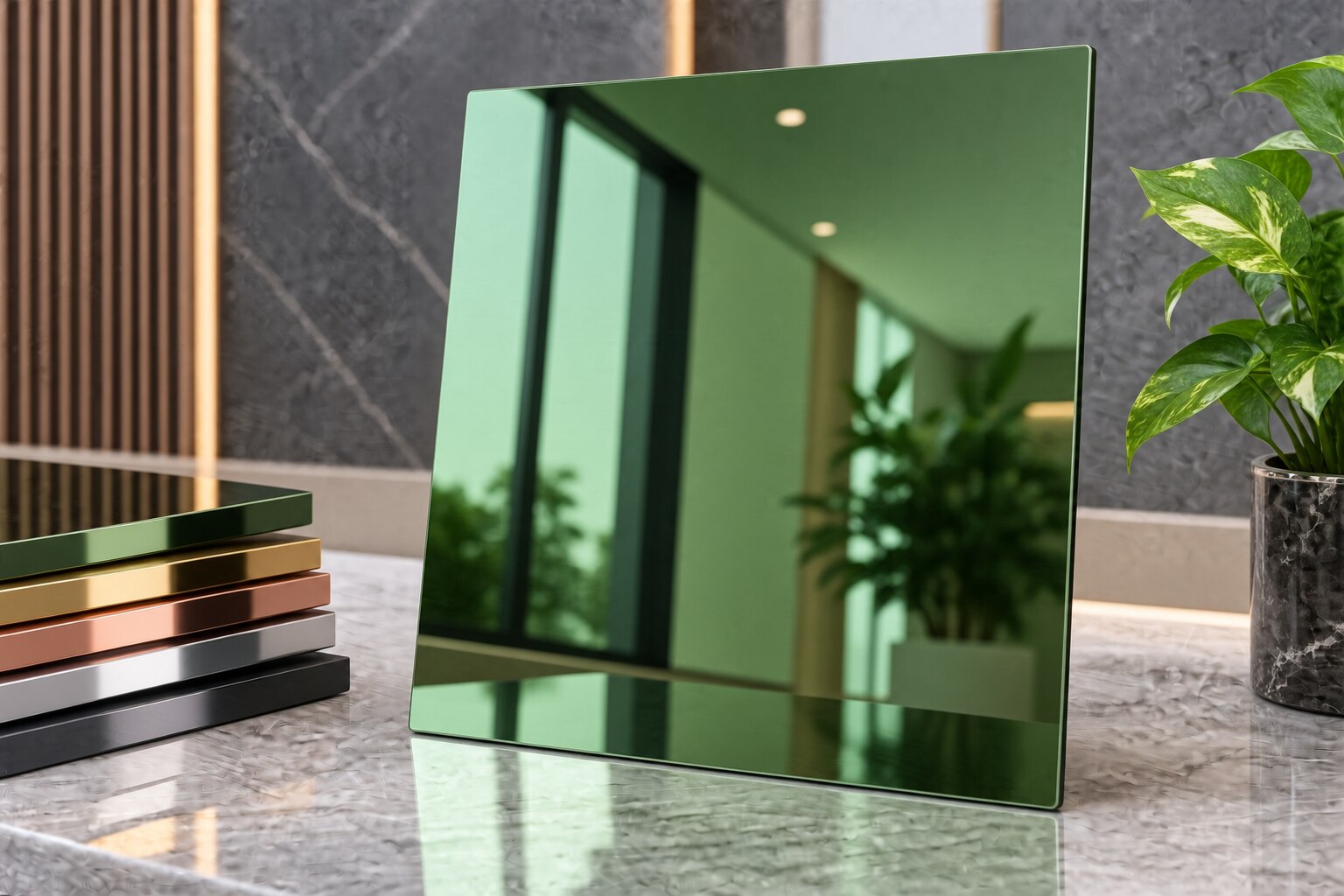
Mumbai monsoon exposure combines persistent humidity, rainwater, splashback, coastal salt and pollution deposits, so a decorative green mirror surface needs more than a colour selection. You will be able to classify the exposure, specify the stainless substrate and finish, inspect samples, control fabrication risks and set a cleaning and drainage routine before installation.
Key takeaways
- Use green mirror PVD sheets on protected surfaces, not unengineered fully exposed façades.
- Separate PVD colour, stainless grade and mirror finish when comparing suppliers.
- Inspect coating, scratches, edges and protective film before cutting each sheet.
- Design drainage and ventilation behind panels to prevent trapped monsoon water.
Decide where green mirror PVD sheets are suitable in Mumbai
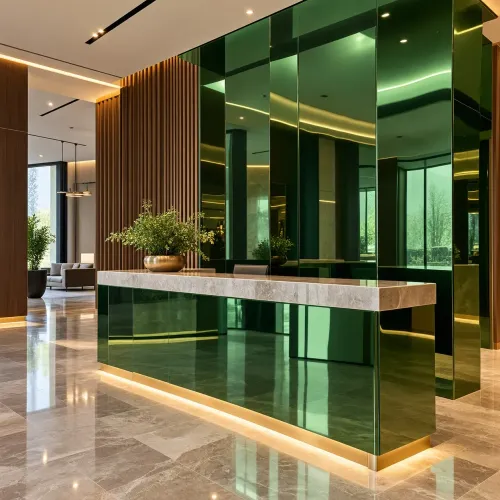
Green mirror PVD sheets suit protected architectural surfaces in Mumbai, but direct-rain façades and other fully exposed locations need a complete corrosion and drainage design, not colour approval alone. Treat green mirror ss pvd sheets for monsoon in mumbai as wet, chloride-contaminated service rather than humidity-only service.
- Interior dry: lobby walls and internal lift surrounds. 304 or 304L is not automatically unsuitable where rain, salt deposits and persistent condensation cannot reach the sheet.
- Interior wet: bathrooms, kitchens and other wash-down areas. Control splashback, trapped condensation and cleaning residues; choose 316 or 316L where wetting persists or washing is difficult.
- Semi-exposed: balconies, canopies, entrance lift surrounds and sheltered façades. Rain may strike edges while sheltered ledges collect salt and pollution without being washed clean.
- Fully exposed: open façades, balcony fronts and canopy tops receiving direct rain. Prefer 316 or 316L, with drainage, washing access and a corrosion specification for the sheet, fixings, supports and sealants.
Ask the supplier to confirm the actual grade of the green sheet itself; a generic coloured-sheet listing does not prove 304, 304L, 316 or 316L. The same rule applies when comparing ss pvd sheets for monsoon.
Specify thickness, flatness tolerance, viewing distance and support spacing for every mirror panel. A thin sheet can oil-can or distort reflections despite a highly reflective surface. The green mirror finish works best on protected surfaces; exposed work needs drainage and maintenance access.
Separate the PVD colour, stainless substrate and mirror finish
Appearance, corrosion resistance and scratch performance come from different parts of green mirror PVD sheets, so a colour name cannot specify the whole product.
| Layer | Controls | What to verify |
|---|---|---|
| Green PVD coating | Visible hue and surface wear | Coating stack, adhesion, abrasion or scratch result |
| Stainless substrate | Corrosion resistance | Grade and performance at cut edges, holes, welds and crevices |
| Polished mirror surface | Reflectivity and visible defects | Haze, waviness, polishing lines and handling marks |
The green PVD layer creates the colour; it does not replace stainless steel's protection against corrosion. A polished mirror surface improves reflection but does not prove outdoor durability, and a scratch test must cover the actual coating and substrate rather than rely on “green” as a specification.
Approve a physical sample or master panel before ordering green mirror stainless sheet. Hue changes with viewing angle, substrate polish, coating stack and production batch. Record acceptable limits for shade, gloss, reflection quality and batch-to-batch variation in writing.
Request adhesion, abrasion or scratch evidence and a corrosion test for the specified grade and finish. ASTM B117 is useful for comparative laboratory salt-spray evaluation, not for predicting a number of outdoor years in Mumbai.
Use a clean, removable protective film during fabrication and installation. Confirm its compatibility, remove adhesive residue promptly, and control exposure to heat, rain, trapped moisture and prolonged sunlight; otherwise the film can imprint or stain the PVD face.
Inspect every sheet before cutting and control the finished edges
Approve every green mirror stainless sheet before cutting, not after fabrication has hidden defects. View each sheet under diffuse light, then under angled light, and compare it with the approved master panel.
For ss pvd sheets for monsoon projects, confirm continuous green colour, clear mirror reflection, and no pinholes, haze, polishing marks, scratches, waviness or shade variation. Record each batch number and quarantine panels that do not match.
Use this inspection sequence:
- Check the decorative face under both lighting conditions and record defects by sheet number.
- Match colour and reflection against the master panel from the agreed viewing distance.
- Mark approved sheets before cutting; keep non-matching sheets physically separate.
- After fabrication, inspect every hole, corner, return and edge again.
| Fabrication activity | What can go wrong | Required control |
|---|---|---|
| Cutting or drilling | Chipped face, marked finish, exposed substrate at holes or edges | Use stainless-only tools, remove swarf immediately and protect the face with compatible removable film |
| Bending | Cracks, edge damage or distortion | Use clean tooling and inspect folded returns and hems |
| Welding | Heat tint, distortion and local colour damage | Keep welds outside visible green areas; specify repair or panel replacement before site work |
Use clean worktables that have never carried carbon steel; embedded iron particles can rust on the surface. Plan folded returns, hemmed edges or replacement panels where exposed edges cannot be protected. Remove film before adhesive residue, moisture, alkaline wash water, heat, rain or sunlight imprint the finish.
Prevent trapped water behind panels and around fixings
Water trapped behind a panel can corrode edges, stain the finish and loosen fixings even when the visible sheet passes inspection. For pvd mirror stainless steel in Mumbai, treat the substrate, cavity and fixings as one drainage system, not as separate details.
1. Confirm that the substrate is level, dry and corrosion-compatible. Mark defined support points, leave open drainage paths and provide ventilation wherever the panel creates a cavity.
2. Detail the bottom edge so rainwater cannot sit behind a lap, return or frame. Reject blind pockets, sealed cavities without drainage and horizontal ledges that collect salt and pollution deposits.
3. Use sealants approved for stainless steel and the PVD finish. Reject any product that releases corrosive contaminants or leaves residue that the manufacturer has not verified as compatible.
4. Check fastener material, washer compatibility and galvanic isolation. Separate stainless steel from aluminium, galvanised steel and carbon steel with suitable isolating components, and remove every trace of carbon-steel drilling swarf from joints.
5. Inspect balcony, canopy and façade splash zones separately from visible faces. Check underside returns because sheltered surfaces may remain salt-laden after rain.
6. Approve a mock-up or first panel before full installation. Test alignment, sealant adhesion, drainage, edge appearance and reflection; these checks expose failures early in green mirror SS PVD sheets for monsoon in Mumbai.
Set a monsoon cleaning and procurement routine
Rain does not clean every surface: projections, framed panels, parapets, joints and splashback zones can remain salt-laden. For PVD mirror stainless steel in Mumbai, schedule freshwater rinsing, then use a soft microfibre cloth or non-abrasive pad with mild neutral detergent; work in the polish direction, rinse again and dry immediately with a clean cloth.
Clean sheltered undersides as well as visible faces.
Remove cement residue before it dries. Never use hydrochloric-acid or chloride-bearing cleaners, abrasive powders, steel wool, aggressive scouring pads or unapproved solvents; they can stain, scratch or attack exposed edges.
Compare suppliers against documented evidence, not a colour name.
| Evidence to request | What to check |
|---|---|
| Actual stainless grade and thickness | Confirm the substrate for the green mirror PVD sheets, not a generic coloured-sheet listing |
| Mirror-finish designation and PVD process description | Match reflectivity, polish direction and coating method to the approved application |
| Approved physical colour sample | Approve shade, gloss and reflection quality before production |
| Batch traceability | Require batch numbers on delivery documents and panels |
| Protective-film instructions | Confirm film type, removal timing and controls for adhesive residue, heat, rain and sunlight |
| Adhesion or scratch evidence and corrosion test report | Check results for the actual substrate and finish, including any ASTM B117 or cyclic-corrosion test |
Put exposure class, maintenance access and edge details in the purchase specification. Nixon Steelium LLP is a Mumbai-based supplier you can approach for a project-specific sample and technical confirmation, not proof that every sheet suits exterior monsoon exposure. Choose on documented substrate, finish, fabrication and installation controls.
Related product
 | PVD Coated Mirror Stainless Steel Sheets Specification Coating Type No additional coating (colored by vacuum deposition) Hardness 200 HB Corrosion Resistant Yes, high resistance to corrosion... View product → |
Frequently asked questions
Where are green mirror PVD sheets suitable in Mumbai?
They suit protected architectural surfaces, including covered entrances, interior walls and ventilated soffits. Direct-rain façades require a complete corrosion, drainage and fixing design.
What should you compare when buying green mirror PVD sheets?
Compare the PVD colour, stainless steel substrate grade and mirror finish separately. Ask for the substrate specification and inspect samples under the project lighting.
How should you inspect green mirror PVD sheets before fabrication?
Check every sheet for colour variation, pinholes, scratches, dents, film damage and edge defects before cutting. Protect and control finished edges after fabrication.
How do you prevent trapped water behind PVD stainless steel panels?
Provide drainage paths, ventilation, sealed or correctly detailed joints and compatible fixings. Do not create pockets where rainwater or condensation can remain behind panels.
How should green mirror PVD sheets be maintained during Mumbai monsoon?
Set a cleaning and inspection routine that removes salt, dust and rain deposits with clean water and a suitable mild cleaner, then check edges, joints and fixings.
Keywords